

Sports Physiotherapy for ACL Injury Recovery
Imagine the final minutes of a championship match, the roar of the crowd, and that sudden, sharp pop in your knee that brings everything to a standstill. For many athletes, an ACL injury is more than just a physical setback; it’s like a pause button on their passion. Whether you are a weekend warrior or a competitive athlete, the road back to the field can seem daunting and steep. However, the path to recovery is not one you have to walk alone. By integrating structured Sports Physiotherapy into your recovery plan, you can transform a traumatic injury into a focused comeback story. We understand that your goal is not just to walk again, but to sprint, pivot, and jump with the same confidence you had before the injury.
Understanding the Impact of an ACL Tear on Your Performance
An Anterior Cruciate Ligament (ACL) injury often disrupts the fundamental stability of the knee, affecting how you distribute weight and manage force during movement. Your body starts to compensate when this ligament is damaged, which may put additional stress on your muscles and joints. Symptoms can include:
- Pain and swelling in the knee
- Instability or the feeling of the knee giving out
- Reduced range of motion
- Difficulty performing daily or sports activities
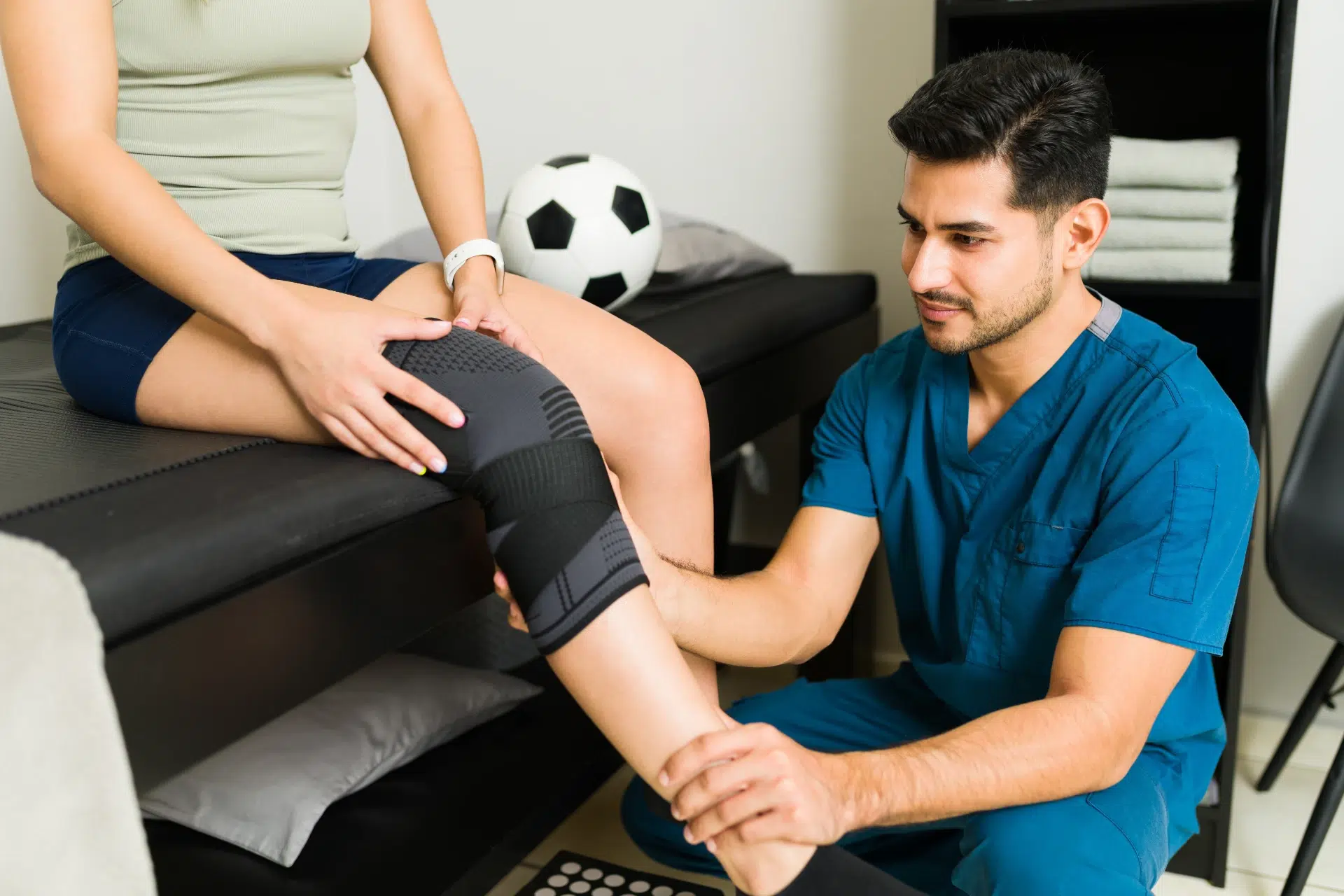
Early assessment by a physiotherapist helps determine injury severity and design an Sports Physiotherapy Edmonton Treatment Program tailored to your rehabilitation needs.
Initial Phase of Sports Physiotherapy for ACL Injury Recovery
The first phase after an ACL injury focuses on controlling swelling, managing pain, and regaining basic knee mobility. Key steps include:
- Rest and protection of the knee
- Gentle range-of-motion exercises
- Icing and compression to manage inflammation
- Using crutches is recommended
During this stage, your physiotherapist can provide guidance on safe movements and help you avoid exercises that might worsen the injury.
The Components of a Sports Physiotherapy ACL Rehabilitation Exercises Program
A successful recovery is built on a series of progressive phases, each designed to challenge your body while protecting the healing tissue. Sports Physiotherapy for ACL injury recovery follows a structured progression that focuses on restoring strength, stability, and movement control. We do not believe in a one-size-fits-all approach; instead, the exercises are tailored to your specific sport and daily demands.
Phase 1: Range of Motion and Quadriceps Activation
In the initial stages, the focus is on regaining the ability to fully straighten and bend the knee. This often involves gentle movements and isometric contractions.
- Straight Leg Raises: To keep the hip flexors and quads active without putting stress on the ligament.
- Heel Slides: To gradually improve flexion in a controlled manner.
- Quad Sets: Simple muscle contractions to prevent the thigh muscles from “shutting down” due to pain and swelling.
Phase 2: Building Functional Strength
Once the initial swelling has subsided and you have achieved a baseline range of motion, we transition into weight-bearing movements. This is where we begin rebuilding the strength needed for everyday tasks and the early stages of athletic training. We prioritize movements like squats and lunges, ensuring your form is perfect to avoid unnecessary shearing forces on the knee.
Phase 3: Neuromuscular Re-education and Balance
An ACL injury often damages the nerve endings that tell your brain where your knee is in space (proprioception). We use balance boards, single-leg stands, and unstable surfaces to retrain these pathways. This step is crucial because if your brain does not respond fast enough to abrupt changes in the terrain or an opponent’s defensive move, strength alone will not be enough to protect you.
Managing the ACL Recovery Sports Physiotherapy Timeline Treatment
One of the most frequent questions we hear is “When can I play again?” While everyone heals at a different rate, Sports Physiotherapy for ACL injury recovery follows a structured timeline that helps manage expectations and ensures you hit specific milestones before moving on to higher-impact activities.
The First Three Months: Protection and Mobility
During this window, the focus remains on protecting the graft or the healing ligament. We work on normalizing your gait so you can walk without a limp and perform light aerobic activities like stationary cycling. Consistency during this period sets the stage for everything that follows.
Months Four to Six: The Transition to Impact
This is often the most challenging phase because you may feel “good,” but the ligament is still undergoing biological changes that make it vulnerable. We introduce light jogging and more complex strength training. This is a period of careful monitoring where we use Sports Physiotherapy in Edmonton to assess how your knee responds to increased loads.
Six Months and Beyond: Return to Sport Testing
Before you are cleared for full contact or competitive play, we conduct rigorous testing. This includes jump tests, agility drills, and strength assessments to ensure your injured leg is within a safe percentage of your healthy leg’s capability. We want to see that you can decelerate and change direction with control.
Returning to Sports Safely
After an ACL injury, returning to sports demands readiness and confidence. Key considerations include:
- Completing functional and strength assessments
- Practicing sport-specific movements under supervision
- Avoiding premature high-impact activities
- Continuing maintenance exercises to prevent re-injury
Patience during this stage ensures a safer and more sustainable return to physical activity.
Benefits of Sports Physiotherapy for ACL Injury Recovery
Engaging in sports physiotherapy Edmonton provides structured support throughout recovery. Benefits include:
- Improved knee stability and strength
- Personalized exercise programs
- Guidance on safe movement patterns
- Enhanced confidence to resume sports activities
Physiotherapy helps bridge the gap between injury and full activity, supporting both healing and long-term knee health.
Choosing a Path Forward for Your Knee Health through Sports Physiotherapy for ACL Injury Recovery
Navigating an ACL injury requires patience, discipline, and the right guidance. Following a structured recovery plan helps you not only heal your ligament but also become a more resilient athlete. Sports Physiotherapy in Edmonton provides a framework to return to an active lifestyle with confidence. Rutherford Physiotherapy offers a supportive environment, personalized care, and evidence-based strategies to help you reach your movement goals, whether for sports or everyday activities.
Take the next step toward stronger knees today; book your consultation with Rutherford Physiotherapy and start your Sports Physiotherapy for ACL injury recovery.